Signs of Hidden Water Damage in Your Los Angeles Home
Spot hidden water damage early — staining, musty smell, rising water bills, warped floors. Free LA inspection: 818-797-9517.
Every restoration professional knows the hardest problems are the ones hiding in plain sight.
Our IICRC-certified field team gets called to dozens of hidden leak jobs every month across Los Angeles.
The Environmental Protection Agency recently reported that average household leaks waste nearly 10,000 gallons of water annually.
That massive volume does not just vanish into thin air.
Greater LA properties conceal moisture exceptionally well, particularly in a few common vulnerable areas:
- Slab foundations hiding leaks under expensive hardwood floors
- Attic supply lines dripping silently above flat ceilings
- Older San Fernando Valley plumbing systems developing slow pinhole leaks
We are going to walk through the exact signs of hidden water damage you need to catch.
Let us look at the subtle cues, what the latest utility data tells us, and how to verify a leak without tearing open walls.
Visual cues: signs of hidden water damage to look at
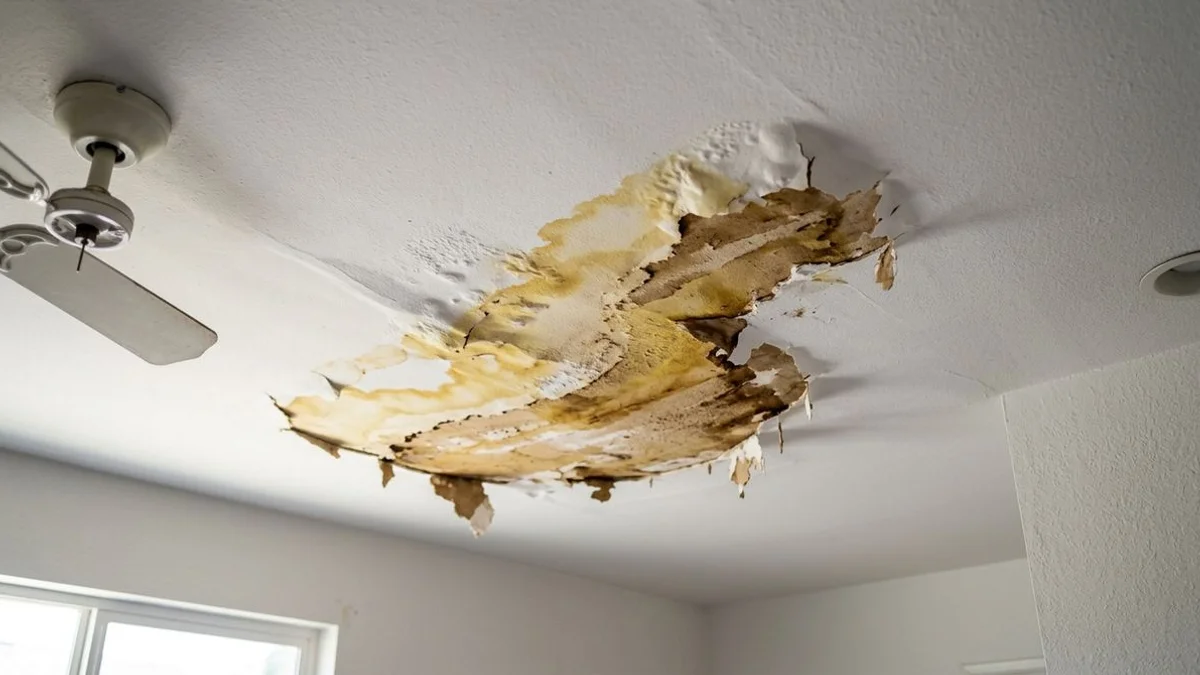
The earliest visible signs of hidden moisture include peeling paint, warped baseboards, and subtle discoloration on walls.
Walk through your home with a flashlight at night and check these specific structural elements:
- Ceiling and wall stains: Look for yellowish or brown rings. They sometimes appear circular and often follow a straight stud line.
- Paint bubbling or peeling: This happens frequently in bathroom corners, around window frames, or directly below upstairs bathrooms.
- Drywall warp: Gently press near suspect areas. If the wall gives or feels soft, moisture has already penetrated the gypsum material.
- Baseboard separation: Check for paint cracks or pieces pulling away from the wall along the floor line.
- Floor cupping or buckling: Hardwood tilts up at the edges of boards when moisture rises through the subfloor.
Our field crews frequently see older San Fernando Valley homes with galvanized pipes that develop slow leaks behind walls.
Los Angeles has hard water with high mineral content that actively corrodes copper pipes.
This calcium and magnesium buildup creates microscopic pinhole leaks that drip silently.
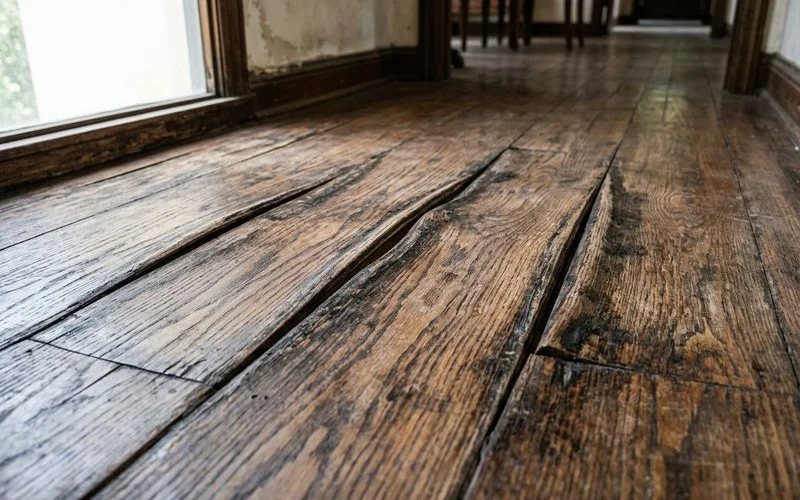
Slab leaks often present as warm spots on tile or hardwood floors.
Baseboard staining that creeps along one wall is another clear warning sign.
You might also notice water bill increases without an obvious source.
Common Los Angeles Pipe Vulnerabilities
Different plumbing materials fail in distinct ways.
Knowing what pipes your home uses will help you identify the specific hidden leak signs faster.
We constantly monitor how local water conditions affect different building materials.
Here is a quick breakdown of the most common issues based on local plumbing types:
| Pipe Material | Common Vulnerability | Early Visual Sign |
|---|---|---|
| Copper Pipes | Mineral pitting from hard water | Tiny green or blue corrosion spots on exposed lines |
| Galvanized Steel | Internal rusting and decay | Brownish water stains or discolored tap water |
| Older PVC | Joint failure from water hammer | Sudden localized swelling in drywall |
What you can smell
Persistent musty odors concentrated in one specific area are the strongest olfactory indicator of a hidden leak.
Mold colonies release microbial volatile organic compounds.
These create an earthy, basement-like smell before you ever see physical growth.
The 24 to 48 hour mold window begins the precise moment damp porous building materials reach approximately 16 percent moisture content.
If you walk into a closet, basement corner, or HVAC return-air room and notice a smell that was not there last year, you need a moisture check.
Our technicians always advise homeowners to trust their nose.
Do not try to mask an earthy odor with air fresheners.
Those basement-like smells often appear weeks before any visible mold forms on a surface.
What you can hear and feel
You can often detect water damage warning signs by listening for dripping behind walls at night or feeling unexplained temperature changes underfoot.
Ambient noise drops significantly after dark, making these subtle clues much easier to catch.
We recommend turning off all appliances and listening closely in suspect rooms.
Pay attention to these specific physical and auditory cues:
- Dripping or running sounds: Listen near walls or in attics, especially at night when the house is quiet.
- Hissing at the meter: A faint hissing sound when no fixtures are running is a classic signature of a slab leak.
- Soft spots underfoot: Walk barefoot over hardwood or tile floors to check for unexpected sponginess.
- Temperature anomalies: Notice cold or warm spots that do not match the normal heating and cooling pattern of the room.
- Banging pipes: A sudden stop of water flow can cause a water hammer effect. This repeated movement weakens joints over time and causes leaks.
What your bills can tell you
A water bill that creeps up by 10 to 30 percent with no change in your daily household usage is a strong indicator of a slab leak.
A flat bill that suddenly jumps and stays elevated requires immediate investigation.
Many Greater LA water districts publish monthly usage data online for easy tracking.
The Two-Hour Meter Test
The EPA recommends a simple test to verify unexplained bill increases.
You can perform this check in just a few steps:
- Locate your main water meter and write down the exact number on the display.
- Ensure no one uses any water for a full two-hour period.
- Check the meter reading again after the time elapses.
If the number changes at all during that idle window, you almost certainly have an active leak.
Our team suggests comparing your last six months of statements to spot unusual trends.
The Los Angeles Department of Water and Power utilizes a tiered pricing system, meaning higher usage pushes you into Tier 3 or Tier 4 rates.
A hidden leak actively penalizes you with those higher utility pricing brackets.
How we confirm without demolition
Professional water damage restoration starts with accurate diagnosis, not unnecessary demolition.
We use advanced thermal and moisture-reading technology to pinpoint the exact location of the trapped water. Once we confirm a leak, the next phase follows our step-by-step water damage restoration process — extraction, structural drying, daily monitoring, and final clearance readings.
These non-invasive diagnostic tools prevent unnecessary structural damage.
Our exact setup includes specific specialized equipment:
- Thermal imaging cameras: Brands like FLIR detect cold spots from evaporative cooling inside damp materials.
- Pinless moisture meters: Tools like Protimeter read straight through drywall to measure moisture content non-destructively.
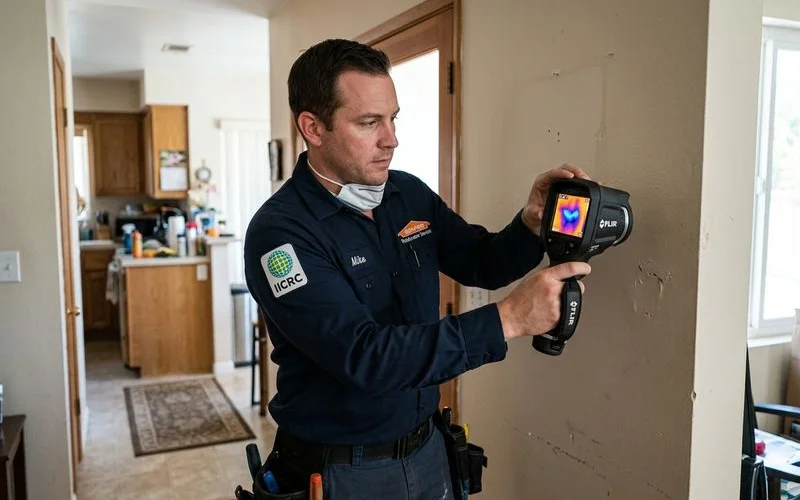
Cold spots on thermal imagery often reveal hidden moisture before any visual sign appears.
Our inspection answers the critical question of whether a leak exists without opening a single wall.
You gain complete clarity on the situation before any structural removal begins.
When to act versus monitor
You must act immediately if you see actively spreading staining, smell new musty odors, or experience water bill increases alongside floor warping.
If you only spot one borderline visual cue with no other symptoms, you can monitor the area for two weeks.
- Mark the perimeter of an old yellow ring lightly with a pencil.
- Check the same spot daily.
- Watch closely to see whether the boundary expands over the next fourteen days.
Our experts always suggest erring on the side of caution.
When in doubt, make the call for a professional assessment, because an inspection offers a clear path forward without any initial obligation.
We would much rather give you a clean bill of health than show up after a small drip becomes a massive wall cavity mold problem.
Conclusion
Catching the signs of hidden water damage early protects your property value and your family’s health.
Ignoring these subtle warnings only leads to more expensive structural repairs and extensive mold remediation down the road.
We encourage you to take a walk around your house tonight with a flashlight.
Check your baseboards, listen for running water, review your latest utility bill, and if you suspect a problem, schedule a free diagnostic inspection.